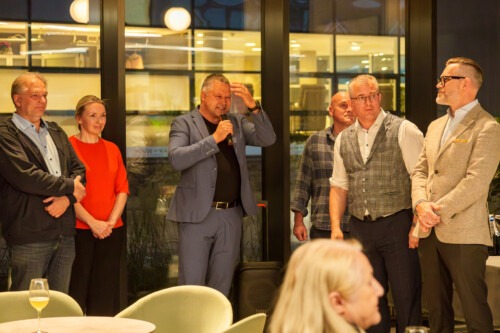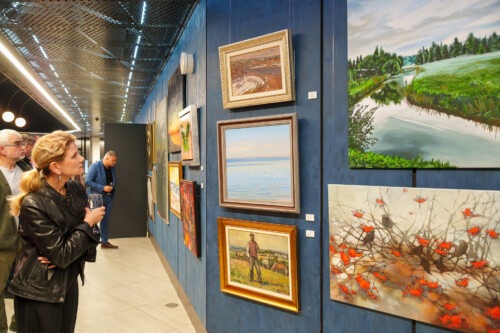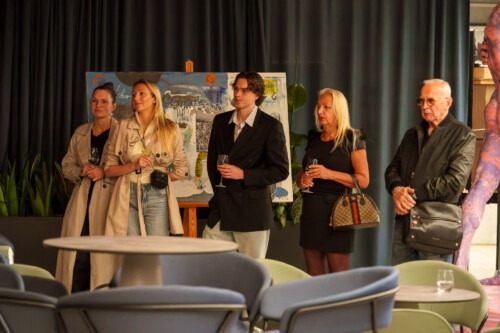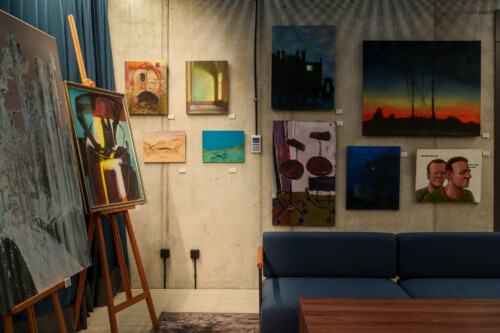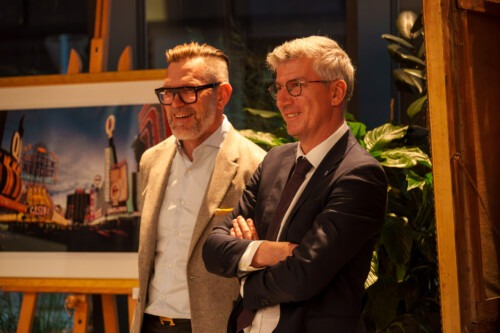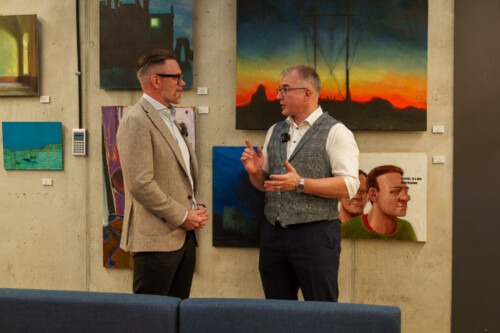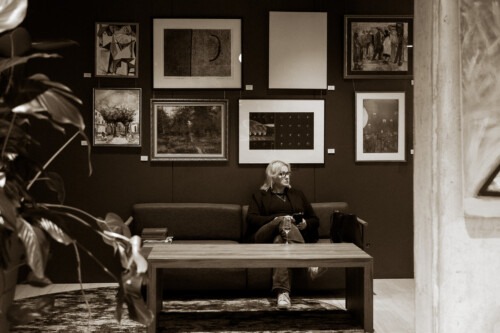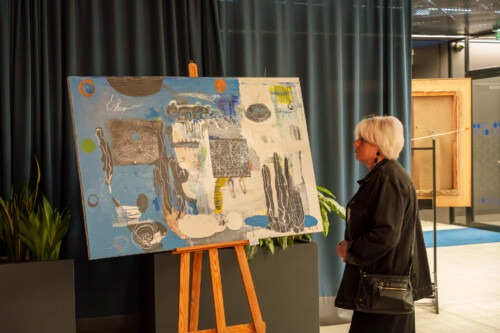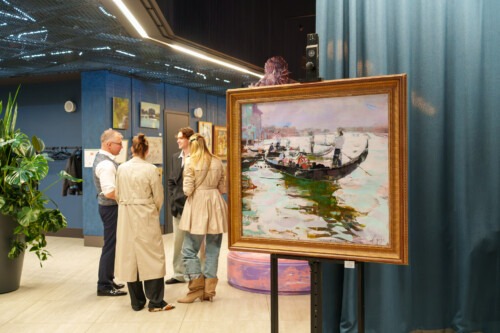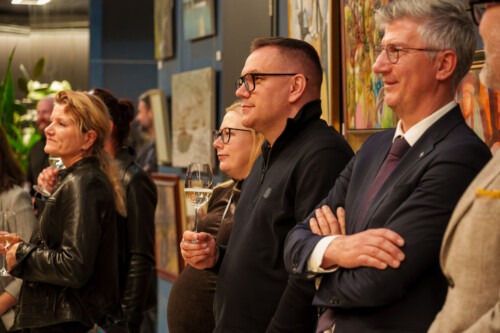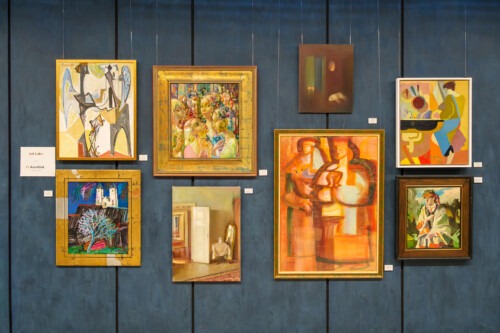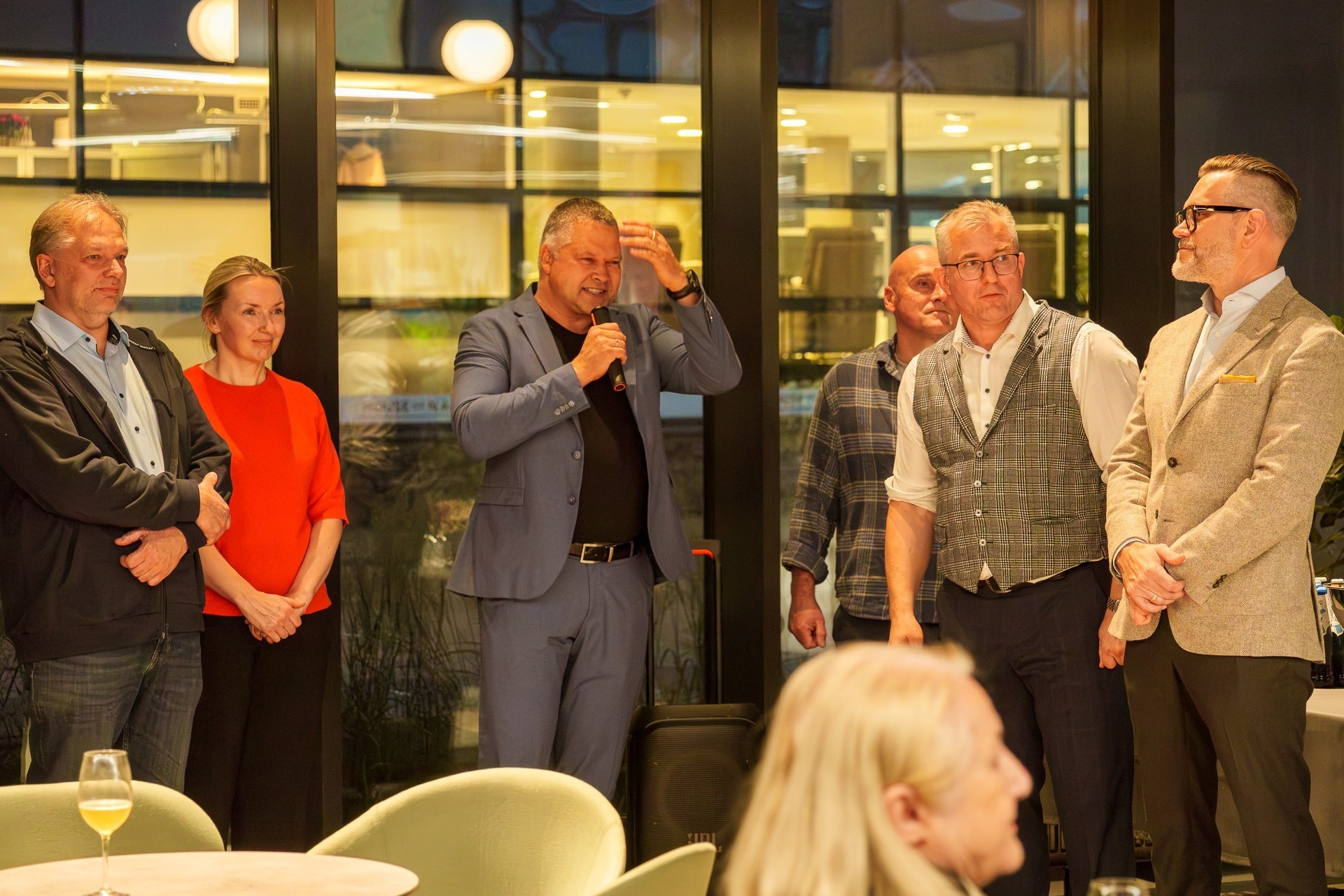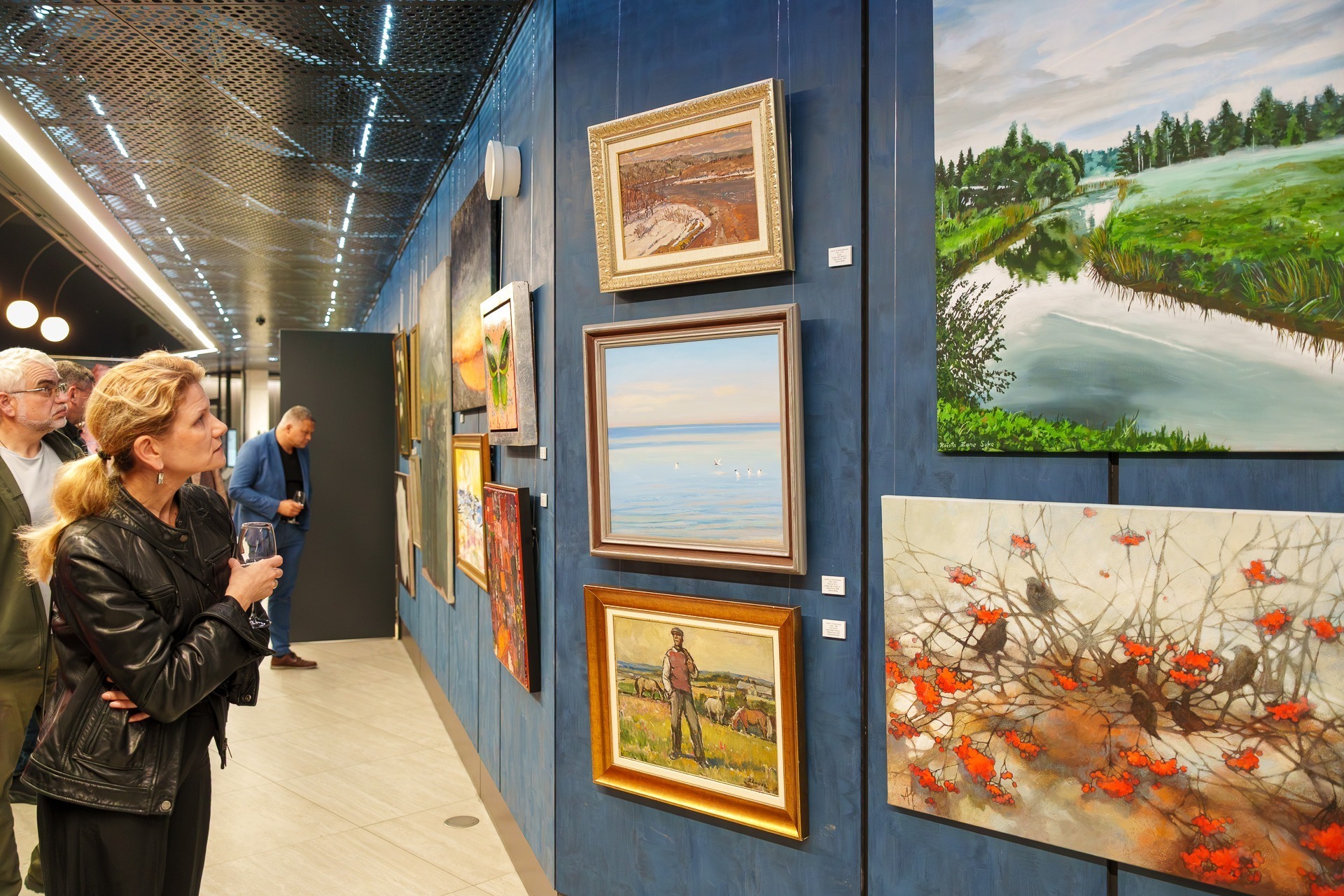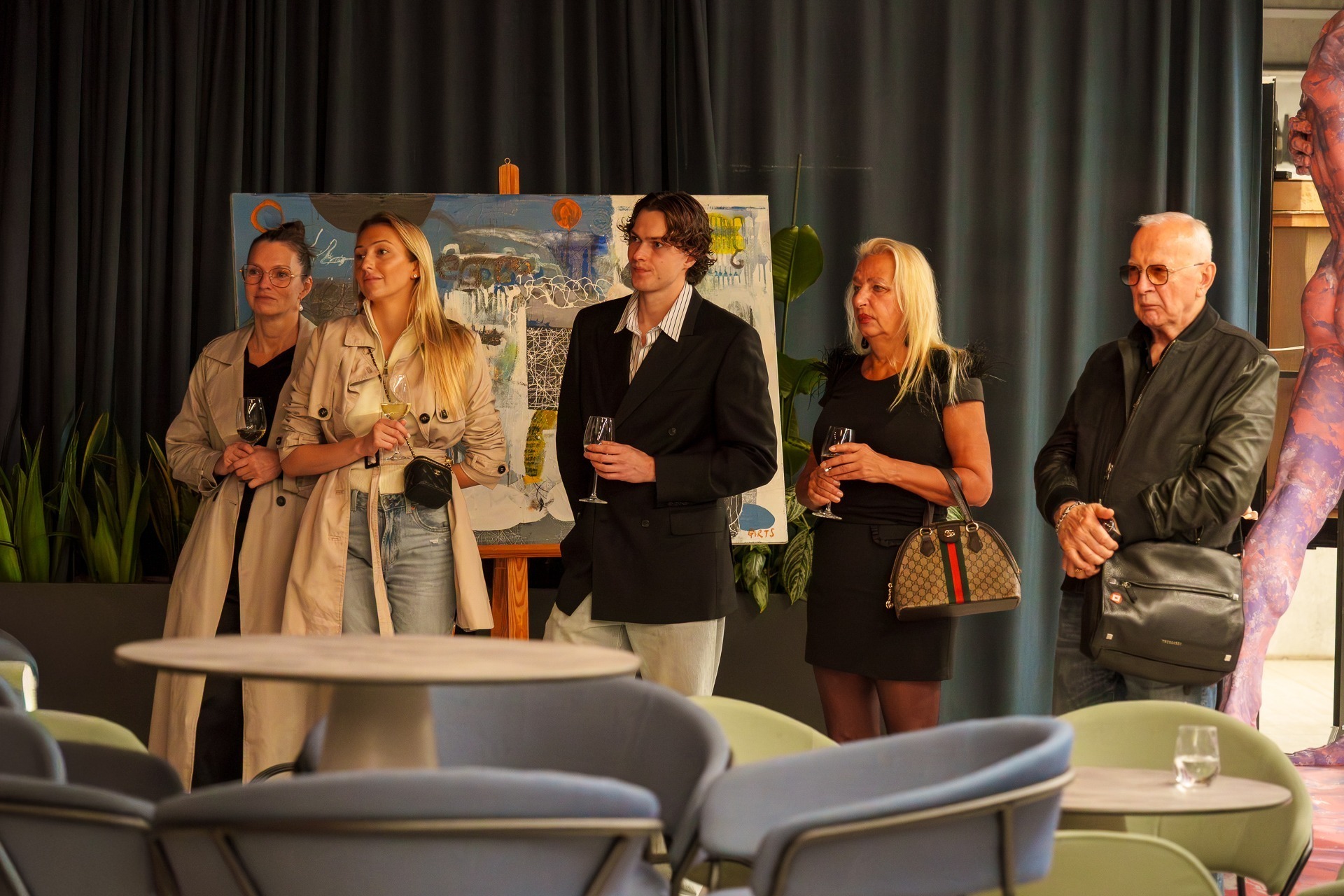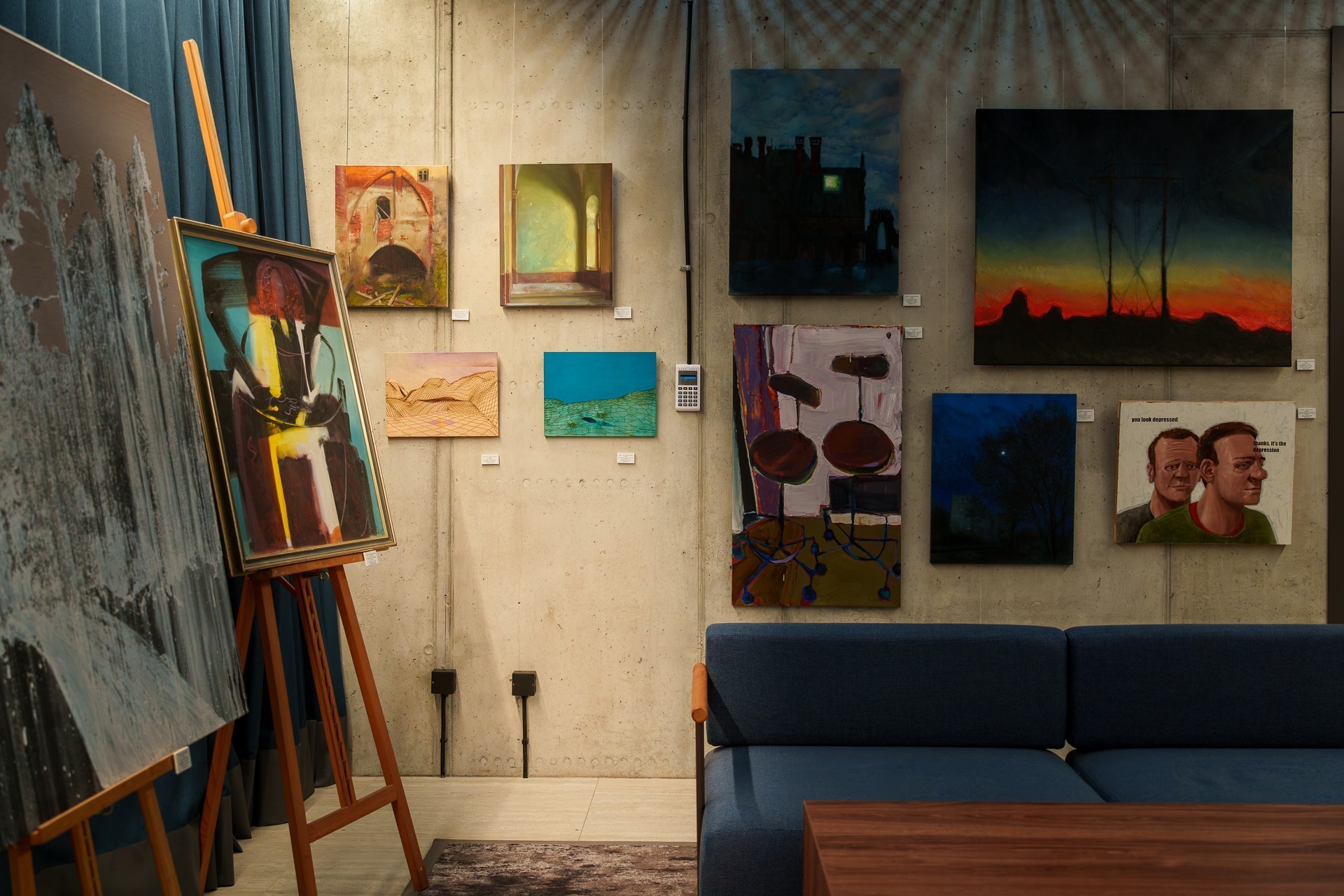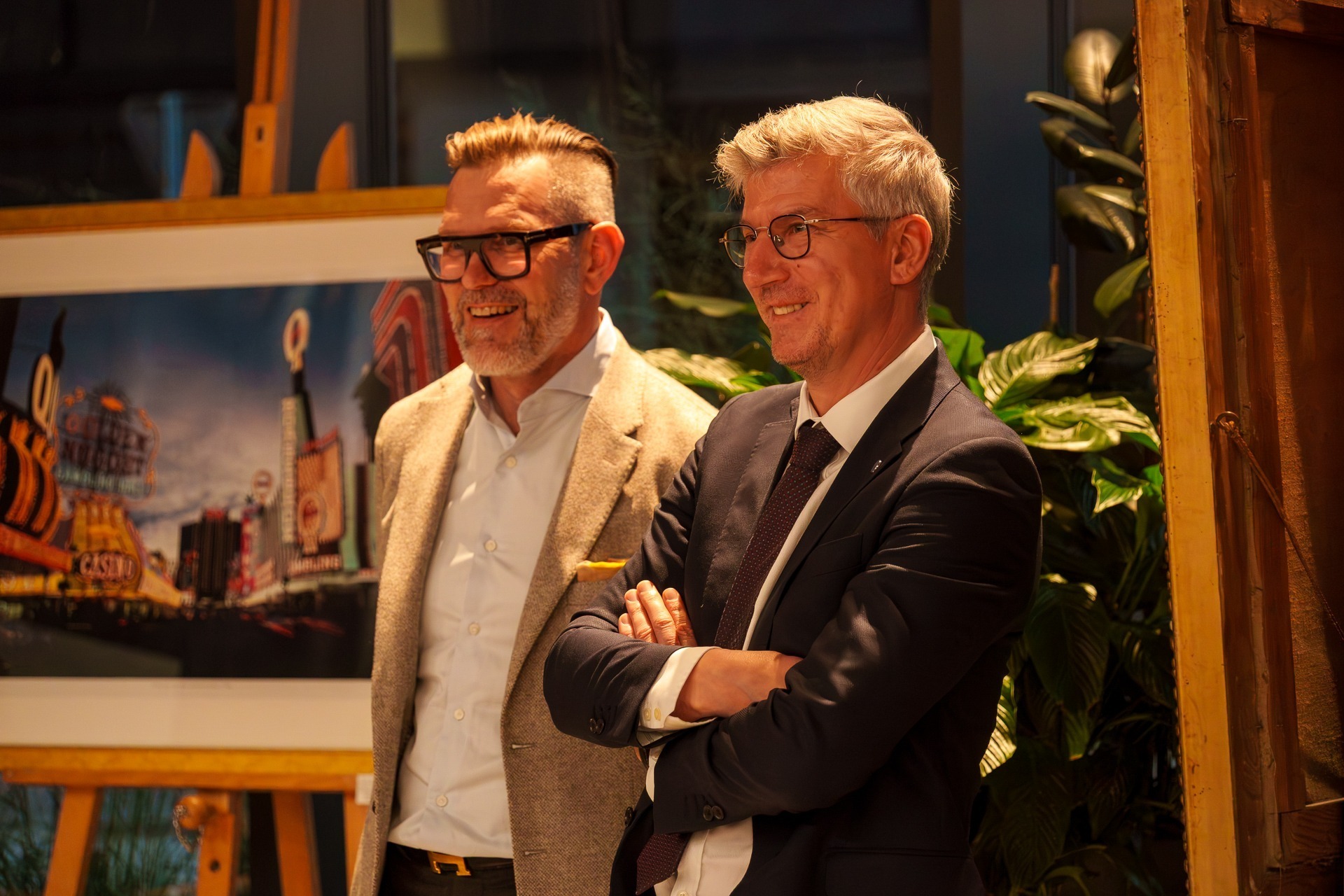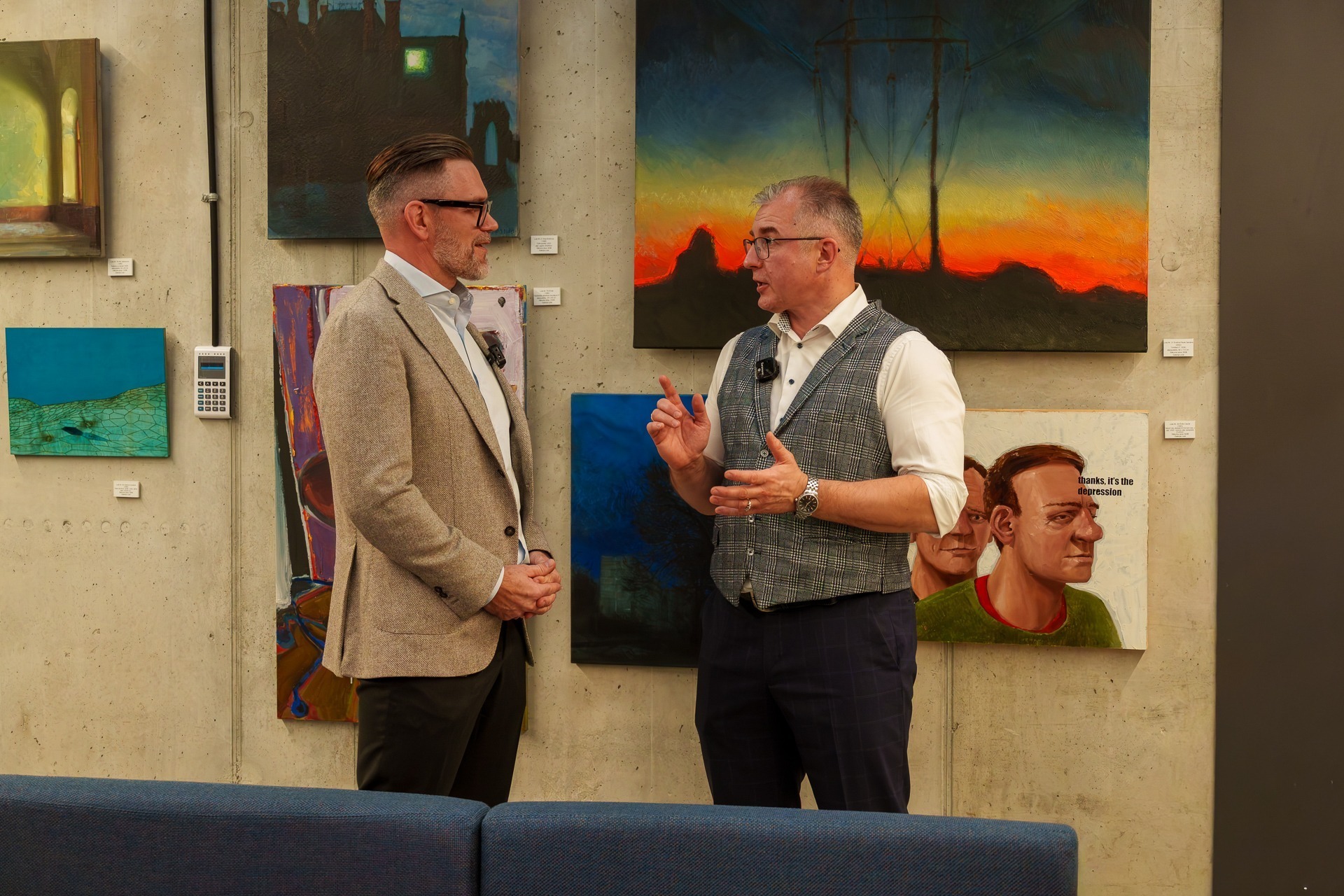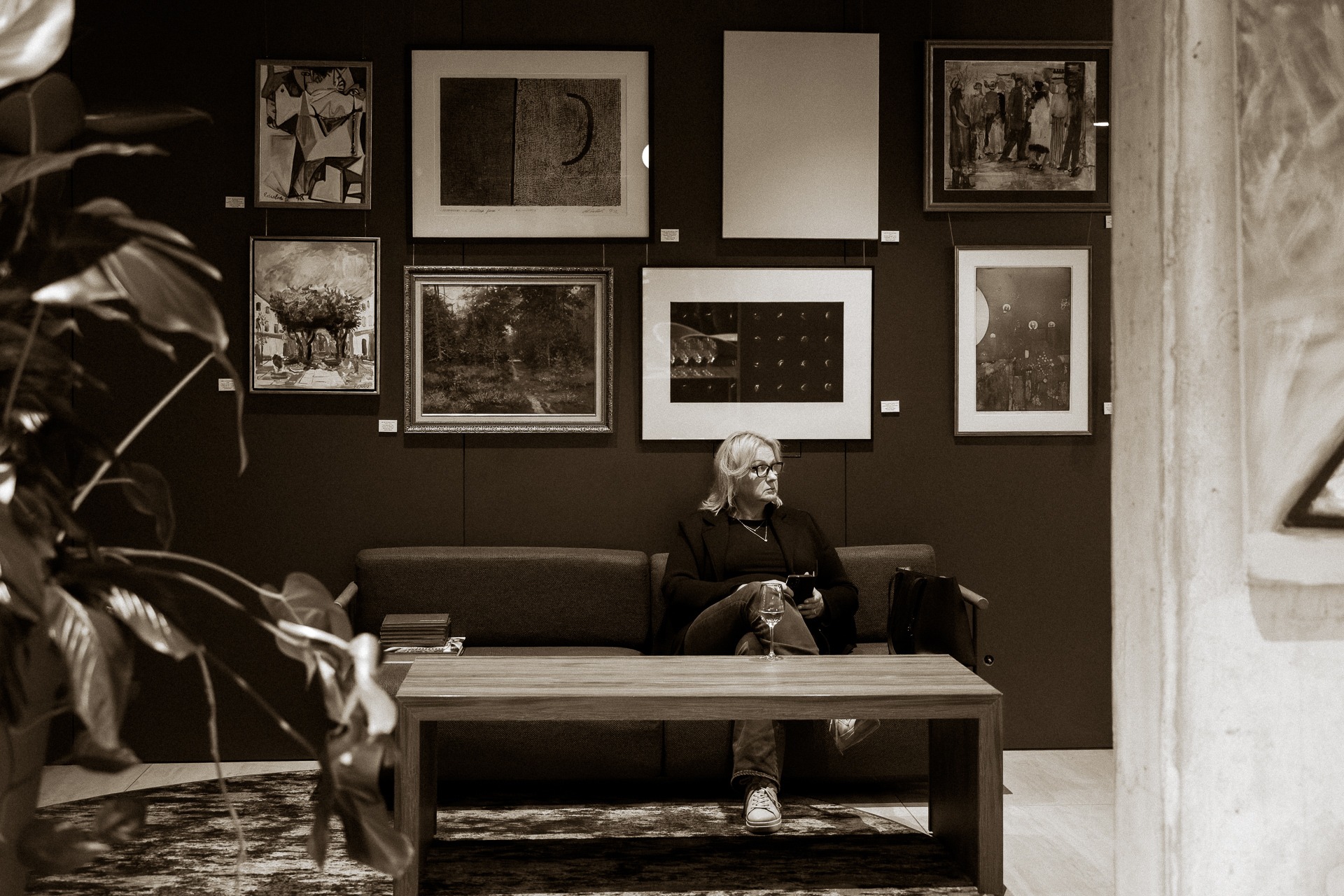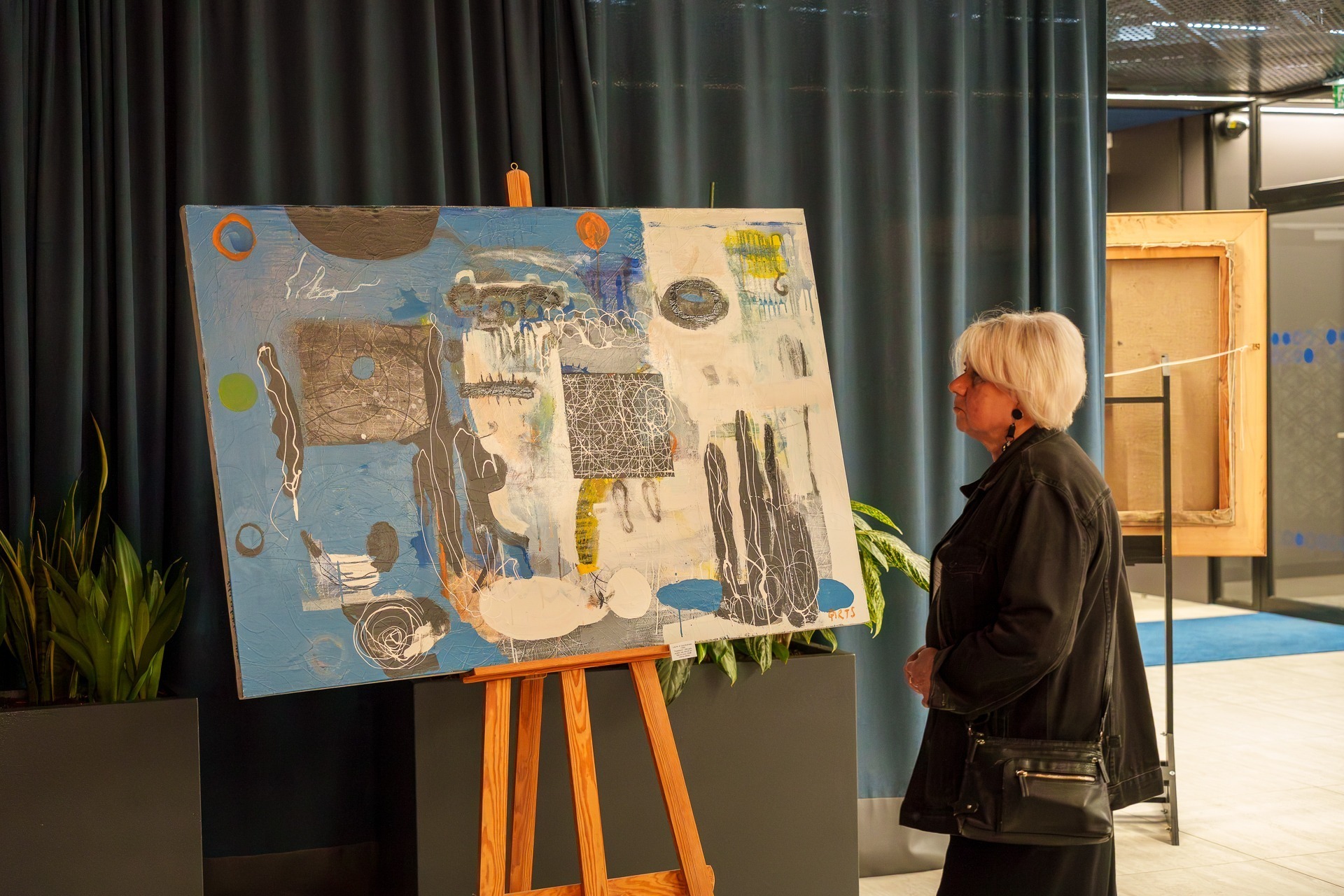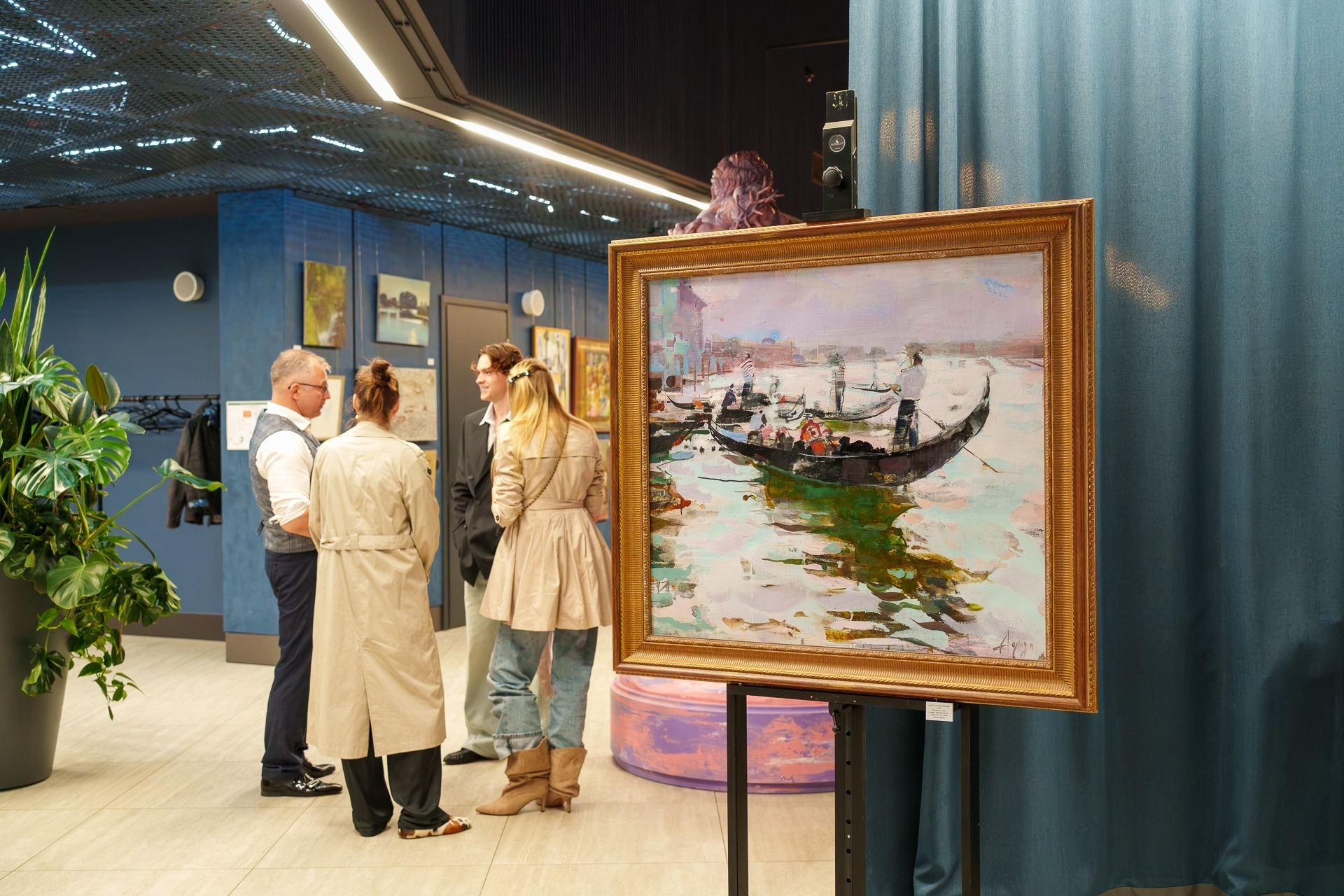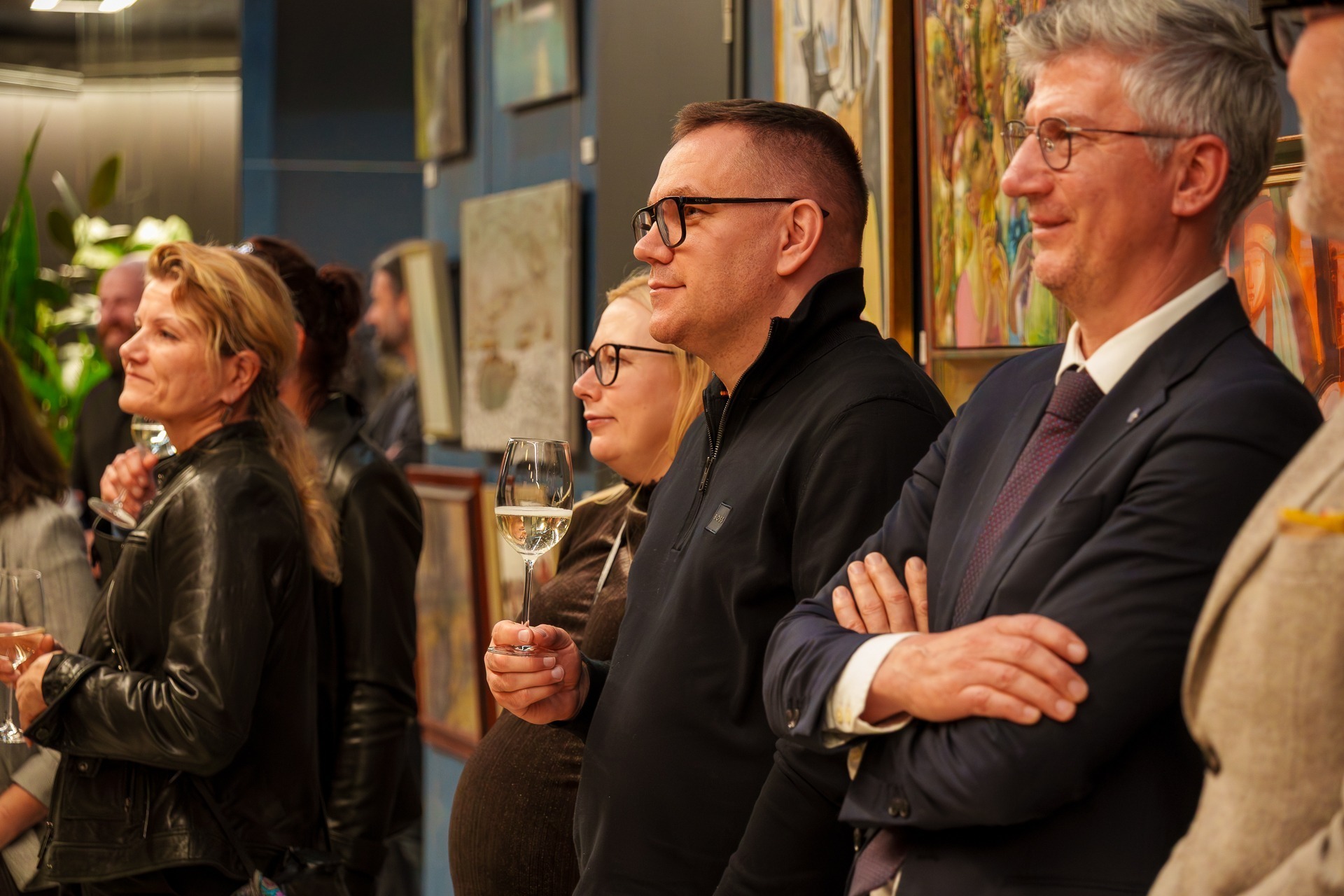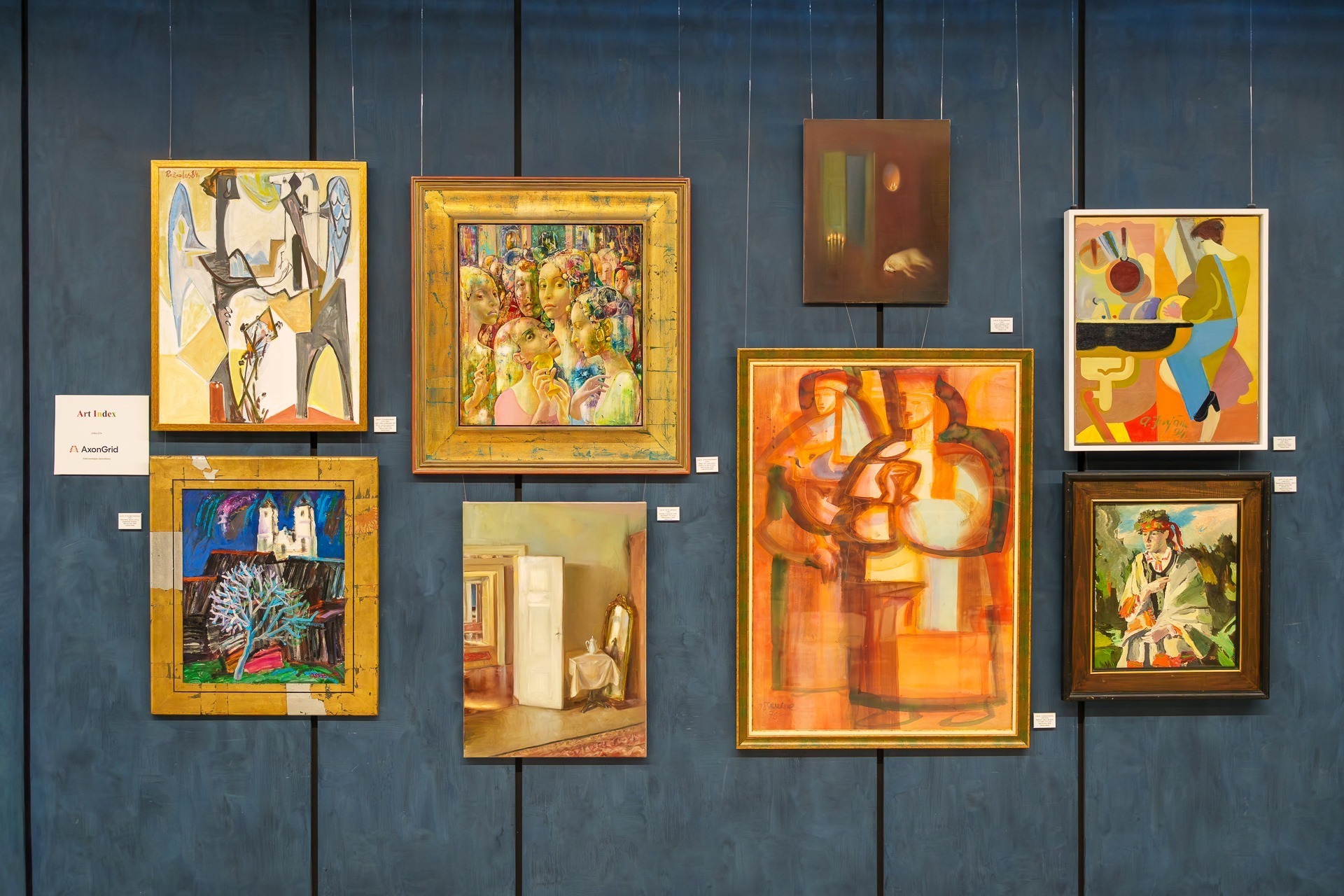


On 8 October, four Latvian art galleries – LOOK! Gallery, Jēkabs Gallery, Stella Gallery and Birkenfelds Gallery – came together for the opening of “Art Index” in the lobby of ZEISS biroji at MŪKU SALA. Featuring around 80 works by artists from different generations, the exhibition brings together four distinct perspectives on Latvian art. The works will also be offered at a live auction on 24 October. Beyond showcasing art, the collaboration invites visitors to explore the Latvian art market and discover how art can become part of everyday life.
The exhibition’s title, “Art Index”, reflects the idea of finding one’s way through the world of art. Each gallery offers its own point of reference, presenting artists whose careers it follows, creative approaches it values and works it believes deserve attention. Together, these selections capture the diversity of the Latvian art market, bringing established masters alongside emerging talents and traditional landscapes alongside contemporary experimentation.
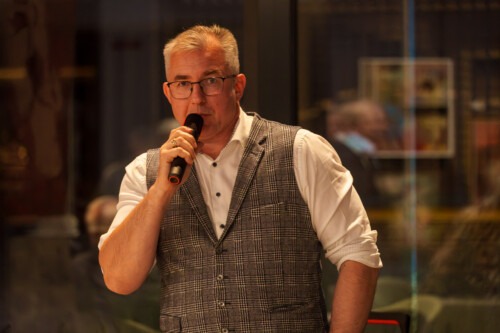
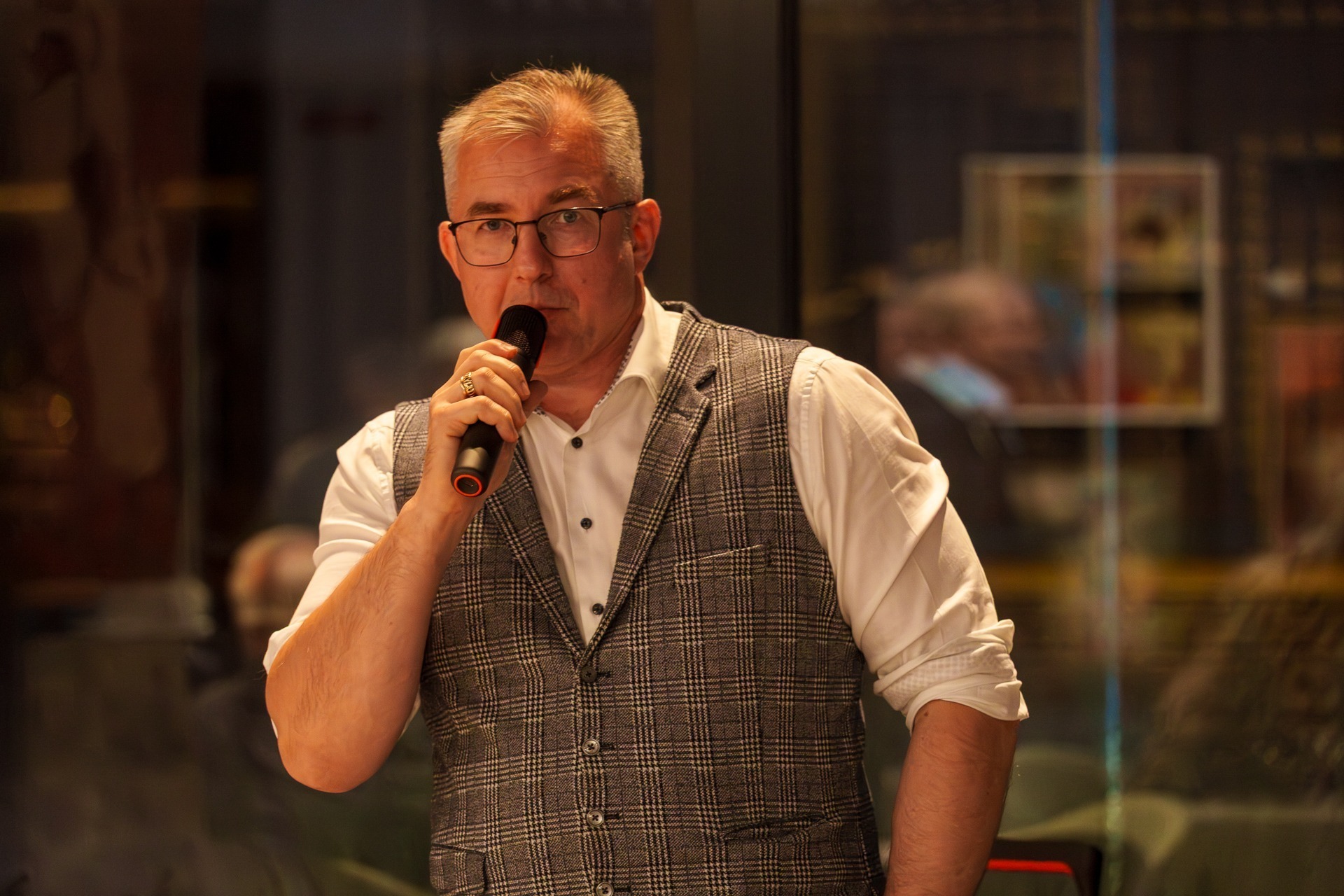
The collaboration began with an invitation from Toms Zvirbulis, director of Birkenfelds Gallery, who asked fellow gallery owners to each select approximately 20 works. Every gallery brings its own expertise, relationships with artists and connections with collectors. By combining these networks, the galleries can introduce their artists to new audiences while giving visitors a broader selection of works to explore. “Together, we are shaping the art market,” says Zvirbulis. At the heart of this approach is a willingness to share knowledge and build a wider interest in art through collaboration.
The selection made by the gallery owners also offers a useful starting point for those less familiar with the art world. Visitors need neither extensive knowledge of art nor previous collecting experience to appreciate the exhibition. Even without plans to make a purchase, they can compare different works, discover new artists and speak directly with the gallery owners about the thinking behind their selections.
The exhibition brings together different eras and different ways of seeing the world. In a landscape by Janis Rozentāls, the Daugava River near Koknese, with sailing boats on the water, offers a glimpse into the rhythms of an earlier time. By contrast, a painting by Evelīna Paula Zandere, born in 2002, captures a contemporary landscape marked by power lines and the anticipation of sunrise. Generations separate the two artists, yet their works share an interest in light, the surrounding environment and the fleeting moments they choose to preserve.
Sometimes, it is the works that seem hardest to explain at first glance that hold our attention the longest. A painting by Andris Eglītis may initially appear almost entirely white, yet a closer look reveals subtle shifts in tone. It is a work that rewards patience and invites questions: What do we see? What draws us in? How does our impression change the longer we look? Placed alongside paintings rich in narrative and detail, it serves as a reminder of how varied the experience of looking at art can be.
“Art Index” also encourages open conversations about the price of art. The exhibition includes several price categories, ranging from €200 to €500, €500 to €1,000 and €1,000 to €5,000. This range makes it possible to consider buying art at different budget levels. With prices clearly displayed, visitors can explore what is available and ask questions about how individual works are valued.
The size of a painting alone does not determine its price. An artist’s place in art history, demand for their work and the characteristics of the individual piece all play a role. A gallery owner can help explain these factors, but a decision to buy art should not be based solely on market value or the artist’s reputation. “Choose something you really like,” advises Zvirbulis. After all, a work of art becomes part of its owner’s everyday surroundings, so it matters that it is something they will want to look at time and again.
Seeing a work in person before buying it can make all the difference. Its scale, texture and subtle variations in colour may be difficult to appreciate on a screen. Sometimes, a small detail or the way light falls across a surface can change how a piece is perceived. Even a familiar painting can reveal something new when viewed in a different space or under different lighting.
On 24 October, the exhibition will conclude with a live auction, giving visitors a chance to see the art market in action. They will be able to follow the bidding, watch works find new owners and gain a closer understanding of how an auction unfolds. The event will also bring together gallery owners, collectors and art enthusiasts, creating space for conversation and exchange. For those who purchase a work, the experience of acquiring it at auction may become part of its story – one that continues long after the artwork has found its place in a new home.
At MŪKU SALA, art is woven into the everyday working environment. Employees and visitors at ZEISS biroji can revisit the artworks, discover details they may have overlooked and share their impressions with colleagues.
People visiting the building for meetings or other events also have the opportunity to discover the exhibition. In this way, art helps bring the business and cultural communities closer together, creating connections through shared spaces, personal curiosity and the presence of art in everyday life.
The exhibition is presented with the support of AxonGrid and Janis Brikmanis.
“Art Index” is on view until 23 October at Birkenfelds Gallery, in the lobby of ZEISS biroji, Dēļu iela 2, Riga. The live art auction will take place on 24 October at 12:00, with doors opening at 10:30. Those who register in advance can also participate by telephone or submit an absentee bid.
This article was prepared in collaboration with Birkenfelds Gallery.
Photo credits: Mūkusalas Business Centre.